On this page
- Malaysian tattoo designs from Borneo: Iban motifs
- Kayan and Kenyah women's tattoos
- Hand-tapping: tools and soot ink
- Respect and etiquette for non-Dayak clients
- Where to get a Borneo tattoo
- Batik tattoo designs
- Bunga raya: the hibiscus tattoo
- Other Malaysian tattoo designs: wau, keris and skyline
- Malaysian flora and fauna tattoo ideas
- Sources and further reading
- Frequently asked questions
Quick answer
The best-known Malaysian tattoo designs come from Borneo, where the Iban bunga terung marks a young man's coming of age. Other Malaysian designs draw on batik, the bunga raya hibiscus, the wau kite, the hornbill and the Malayan tiger. For Borneo motifs, learn the meaning first and book an Iban or Dayak artist.
Malaysian tattoo designs range from ancient Borneo traditions to modern takes on national symbols. This guide starts in Sarawak, with the Iban and Orang Ulu motifs that most people search for. It then covers hand-tapping, etiquette and where to book. After that, it turns to batik, the hibiscus and other Malaysian icons that work well in any style. Meanings here come from published sources, which we link throughout. Where sources disagree, we say so.
Malaysian tattoo designs from Borneo: Iban motifs
In Iban, words for tattoo include pantang, pantak and kelingai. That comes from a 2022 study in Universiti Malaysia Sabah's Jurnal Borneo Akhailogia. Traditionally, a person had to earn many motifs. These Malaysian tattoo designs recorded a man's journeys, courage and standing, so each design said something specific about its wearer.
Iban tattoos also followed a prescribed order. However, sources disagree on the exact sequence. The Malay Mail quotes artist Simon David saying the throat and shoulder designs came first. In contrast, Sarawak Tourism material lists a different order. So treat any single "correct order" you read online with caution.
Bunga terung: the Iban tattoo most people mean
The bunga terung (also written bungai terung) is the eggplant or brinjal flower. It is a solid, eight-petal rosette, usually about 13 cm across, with a spiral at its centre. Traditionally, a man had one on each shoulder. The spiral has its own name, tali seput nyawa, or "the rope of the breath of life". Sarawak Tourism says tadpole intestines inspired it and that it stands for the life line.
The motif marks a young man's passage into adulthood and his readiness to go on bejalai. Because the shoulders carry heavy loads, people believed the design lent them strength. It is also commonly associated with protection and guidance on the road. Today it is the most recognisable Iban tattoo. Kuching tattooist Ernesto Kalum has called it "the most iconic Iban tattoo".
Traditionally, the bunga terung belonged to men. Even so, Iban tattooist Nicholas Jenta Anchu told Bernama in 2023 that it is acceptable today for adult, independent women.
Bejalai: the journey behind the tattoos
Bejalai means "to walk" or "to go on a journey". Young Iban men left their longhouses to travel and work in search of knowledge, wealth and fame. Along the way, they collected tattoos. The Malay Mail describes them as "passport stamps that document a man's journey". As a result, a heavily tattooed man earned respect, and families saw him as a good match for marriage.
Rekong, ketam, kala and other Iban motifs
The meanings below are the ones sources report. Many varied by district, so treat them as common associations rather than fixed rules.
- Ukir rekong (throat). The only traditional Iban motif on the throat. Views differ on its purpose. The UMS study links it to honoured status, such as a headman, war leader or elder. It also reserves it for men. By contrast, Free Malaysia Today calls it a protective mark for young men, often shaped like a scorpion or toad.
- Ketam (crab). Placed on the arm or the back of the shoulders. It is commonly associated with strength, courage and protection from evil spirits. Some also believed it brought help from river and sea spirits if the wearer lost their way or began to drown.
- Kala (scorpion). A protective charm for warriors, sometimes on the arm as kala lengan.
- Nabau (dragon or serpent). A sacred creature with a horn and a glowing stone between its brows that lights its way at night. Artists often paired it with the hornbill as symbols of the upper world.
Kelingai, hornbill and other motifs
- Kelingai. This word is both a general Iban term for tattoo and, in some studies, the name of a specific motif. One case study from Sri Aman links the motif to animals that live in holes in the ground. It suggests that human life is bound to the earth.
- Kenyalang (rhinoceros hornbill). A sign of rank, prestige and leadership, and a guard against evil spirits.
- Garing (tree of life). Usually on the chest and commonly associated with immortality.
- Pala tumpa'. A wrist and finger design for women who were master weavers of pua kumbu cloth or skilled dancers.
Some Iban motifs were never decorative. The tegulun on the hand was a headhunter's mark, earned only through war. Similarly, the rekong and pala tumpa' carried strict conditions. If you are not Iban, do not request these. A good Iban artist will usually steer you away from them anyway.
Kayan and Kenyah women's tattoos
Among the Kayan, Kenyah and related Orang Ulu groups, the picture was the reverse of the Iban. Here, women tattooed women. According to anthropologist Lars Krutak, the craft passed from mother to daughter. The Kayan word is tedek, while the Kenyah say betiek.
A girl usually began at about age ten with her fingers and the tops of her feet. Her forearms followed about a year later, then her thighs. The full set took three to four years, and it signalled readiness for marriage. Motifs included song irang (bamboo shoots, for fertility) and kalong kelunan (human figures for ancestor spirits). Another was the aso', a dragon-dog that repels evil.
Krutak also records a striking belief. The tattoos acted as "torches" after death, lighting the soul's way to the land of the dead. Few women in Sarawak still wear these full traditional sets. So if this tradition draws you, look for an Orang Ulu artist. Expect a long talk before any work begins.
Hand-tapping: tools and soot ink
Traditional Borneo tattoos are hand-tapped, not machine-made. Usually three people take part: one taps, one stretches the skin and one receives the tattoo. Sarawak Tourism says the technique "is essentially the same across all the tribes of Sarawak."
The tools
- Kayu tatok. The needle stick. In the old tradition, its tip held sharpened bamboo or bone. Today, artists fit sterile needles.
- Pemalu. This tapping stick, or striker, drives the needle into the skin with steady taps.
- Nujah. This word names the step of tapping ink into the outlined design.
Meanwhile, the Kayan used their own names: an ulang pricker and a tukun striker made of ironwood.
Soot ink, then and now
The traditional Iban ink, alung, came from soot scraped off the bottom of a cooking pot. Makers mixed it with wild honey or boiled it with sugar-cane juice, then left it to ferment for days. People believed soot drove away evil spirits. Today, reputable studios use commercial tattoo ink for health and consistency. Before booking, ask your artist to confirm they use sterile, single-use needles and commercial ink.
Some people find hand-tapping gentler than a machine. For instance, one visitor told SAYS in 2025 that the machine "was way more painful". That is one person's account, though, and pain varies a lot. Our guide to getting a Borneo hand-tap tattoo covers the session, healing and cost in more detail.
Respect and etiquette for non-Dayak clients
Practitioners largely welcome respectful interest. Nicholas Jenta told Bernama it is "even better if outsiders" take an interest in Iban tattoos. Similarly, Simon David told SAYS, "We want to share and preserve the culture." That welcome comes with expectations, though. These steps matter most for Borneo motifs, the most sacred Malaysian tattoo designs.
- Learn the meaning firstRead about the motif and ask the artist about it. KL-based Iban tattooist Eddie David stresses that these tattoos must mean something. After all, you carry the history on your skin.
- Consult before you commitExplain why you want the design. Then let the artist advise on the motif, size and placement.
- Choose a Dayak artist, or one trained in the traditionIdeally, go to Sarawak. If you are in the Klang Valley, look for Bornean artists working there.
- Avoid sacred and status marksSkip the tegulun, rekong and other earned designs. Accept it if the artist says a motif is not right for you.
- Treat bunga terung as a rite of passageArtists often give it to visitors. In fact, it is the usual first Borneo motif. Still, it is a coming-of-age symbol, not a generic flower.
Many urban Iban also mix traditional motifs with modern styles. A 2025 study of festivals in Kuching and Miri found that most people saw this fusion as a real continuation. So the culture is living and changing, not frozen in a museum.
Where to get a Borneo tattoo
For traditional Malaysian tattoo designs from Borneo, Kuching remains the centre of the revival. In old Chinatown, Borneo Headhunters on Wayang Street is the studio of Ernesto Kalum, who has tattooed professionally since 1998. Nearby, Skrang Tattoo on China Street specialises in hand-tapped Iban work, led by Boi Skrang. Just outside the city, Nicholas Jenta Anchu works from Kota Samarahan. Our Kuching tattoo shops guide lists these studios with addresses and booking tips.
In the Klang Valley, several Bornean artists keep the craft alive. Eddie David works at Borneo Ink in Sri Hartamas. Meanwhile, Simon David hand-taps at Electric Dreams Tattoo Collective in PJ. Kuching also hosts tattoo festivals with hand-tapping booths. The Sarawak International Tattoo & Cultural Festival should run from 23 to 25 October 2026 at Kuching Community Hall. Check the organiser's page for updates. Our tattoo expo guide tracks events nationwide.
Borneo masters rarely publish price lists, and many travel for guest spots. So message well ahead and confirm the price before booking. Our tattoo price guide explains the factors that drive cost.
Batik tattoo designs
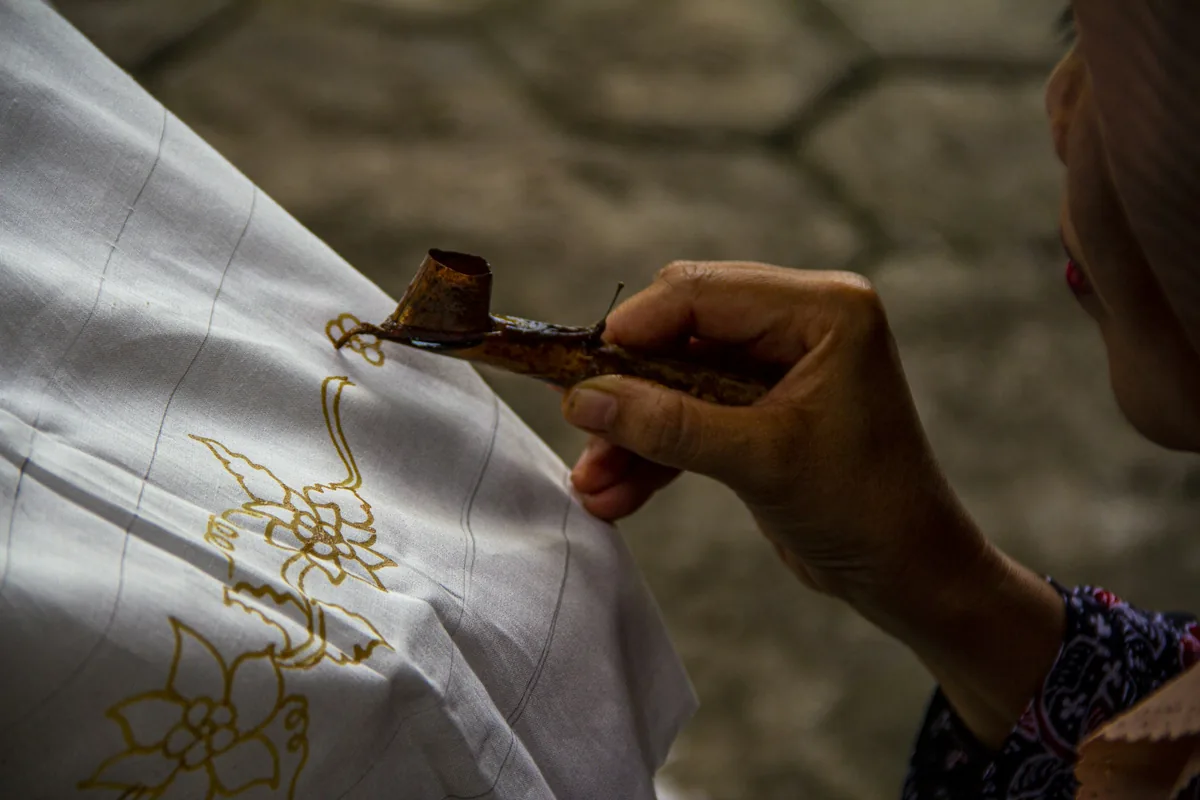
Batik is one of the most adaptable Malaysian tattoo designs outside Borneo. The craft uses hot wax as a dye resist. Artisans draw with a canting, a small pen-like tool. It has a copper wax cup, a fine spout and a bamboo or wooden handle. The wax lines stay pale while the cloth takes the dye around them. As a result, batik has flowing outlines, crackle textures and bold florals.
Those qualities translate well to skin. Fine line artists can echo the wax outlines, while dotwork can suggest the crackle. Colour artists, meanwhile, can borrow the rich reds, blues and golds of batik cloth. In Cheras, artist Jen (@jasper.jen) built a following for batik-style fine line tattoos, according to SAYS in 2023. Check her current work before booking, because that coverage is a few years old.
Bring a photo of a batik sarong or shirt you love, ideally one with family meaning. Then ask the artist to redraw the motif to fit your forearm or shoulder, rather than copying the cloth exactly.
Bunga raya: the hibiscus tattoo
The bunga raya (Hibiscus rosa-sinensis) became Malaysia's national flower in 1960. Prime Minister Tunku Abdul Rahman declared it that year. Its five petals are commonly associated with the five Rukun Negara principles. Similarly, the red commonly stands for courage and life.
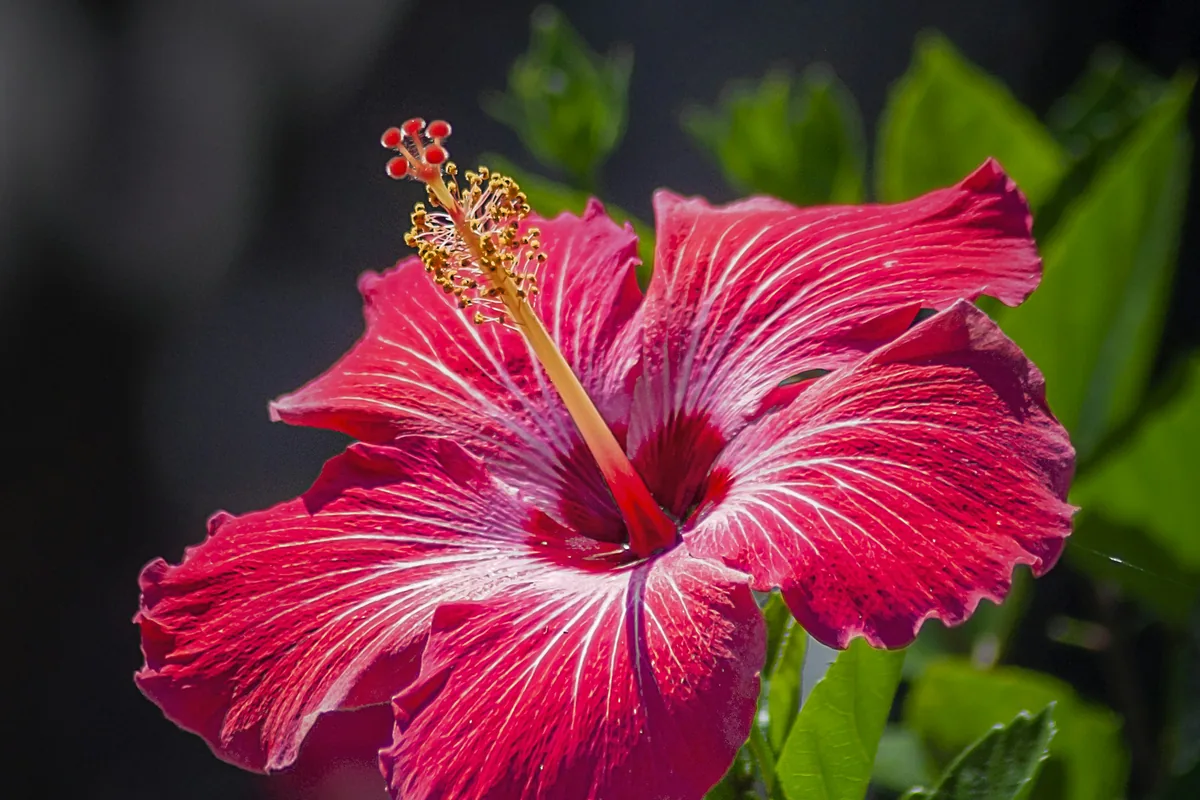
Among Malaysian tattoo designs, the hibiscus suits almost any style. For example, a single red bloom in traditional style reads boldly from across a room. In contrast, a fine line version on the collarbone feels quiet and personal. Many Malaysians living abroad choose it as a reminder of home. Note that red ink causes the most allergic reactions, says DermNet. So mention any allergies at your consultation.
Other Malaysian tattoo designs: wau, keris and skyline
Wau bulan
The wau bulan, or moon kite, comes from Kelantan. Its crescent-shaped lower wings and floral decoration make it one of the most graceful Malaysian tattoo designs. It suits the upper back, the forearm or the calf, where its long shape fits.
Keris
The keris is a wavy-bladed dagger and an important cultural weapon in Malay heritage. It appears in royal regalia and ceremonial dress. However, it also appears in political symbolism. As a result, some people may read a keris tattoo as a political or ethnic statement. In addition, many Malay Muslims avoid tattoos for religious reasons, so a Malay heritage symbol can draw strong reactions. Think about how the design will read before you commit. Our page on whether tattoos are legal in Malaysia covers the wider rules and views.
The Petronas Twin Towers and city skylines
A KL skyline with the Petronas Twin Towers is a clean, modern way to mark home. Because it relies on straight lines, choose an artist with strong linework. Fine line or geometric artists usually suit it best, as our geometric style notes explain.
Malaysian flora and fauna tattoo ideas
- Rafflesia. A parasitic plant with no stems, leaves or roots. Malaysia has several species, including Rafflesia keithii in Sabah, whose blooms reach 60–80 cm. Its thick, spotted petals make a bold, graphic tattoo.
- Rhinoceros hornbill. Sarawak's state bird and a protected species there. It also links to the Dayak kenyalang. So a hornbill tattoo can honour Sarawak without copying a sacred design.
- Malayan tiger. Malaysia's national animal, with two tigers supporting the national coat of arms. It is critically endangered, so some people pair the tattoo with support for conservation.
- Orchids, ferns and rainforest leaves. These offer softer, botanical Malaysian designs that suit fine line and watercolour.
For more ways to turn these themes into Malaysian tattoo designs, see our main tattoo ideas guide. It covers placement and working with an artist.
Sources and further reading
This page draws on the following sources. We recommend them if you want to go deeper into Malaysian tattoo designs and Borneo culture.
- Sarawak Tourism: The fascinating stories behind Sarawakian tribal tattoos
- Malay Mail (2023): Iban tattoos, from the symbol of male prowess to modern-day art
- Saging & Baco (2022), Jurnal Borneo Akhailogia, Universiti Malaysia Sabah
- Kanyan et al. (2025), contemporary Iban tattoo culture in Sarawak, UMS
- Lars Krutak: In the realm of spirits, traditional Dayak tattoo in Borneo
- Lars Krutak: Torches for the afterlife, women tattoo artists of northern Borneo
- Bernama via the Borneo Post (2023): Reclaiming one's culture on skin
- Free Malaysia Today (2019): Stories of a fading culture, told on arms and legs
Frequently asked questions
What is an Iban tattoo?
An Iban tattoo is a traditional design of the Iban people of Sarawak, usually hand-tapped. Motifs such as the bunga terung, ketam and rekong recorded a person's journeys, status and protection. Today, Iban artists in Kuching and the Klang Valley keep the tradition alive.
What does the bunga terung tattoo mean?
The bunga terung, or eggplant flower, marks a young Iban man's passage into adulthood. It also shows his readiness for bejalai, a journey away from home. It is commonly associated with strength and protection, and it sits on the shoulders.
Can non-Iban people get a bunga terung tattoo?
Many Iban artists welcome respectful outsiders, and bunga terung is the motif they most often give visitors. Learn what it means, consult the artist and book a Dayak or trained practitioner. Avoid earned status marks such as the tegulun and rekong.
Where is Iban culture from?
The Iban are one of the largest Dayak peoples of Sarawak, in Malaysian Borneo. Smaller Iban communities also live in West Kalimantan, Indonesia, and in Brunei. Many traditional tattoo motifs come from specific river districts, such as Skrang and Lubok Antu.
Is hand-tapping more painful than a machine tattoo?
It depends on the person and the placement. Some clients say hand-tapping felt gentler, but that is personal experience rather than a rule. Either way, insist on sterile needles and commercial ink.
What are some popular Malaysian tattoo designs?
Popular Malaysian tattoo designs include the Iban bunga terung, batik florals and the bunga raya. Others are the wau bulan kite, the hornbill, the Malayan tiger and the KL skyline. Choose an artist whose style suits the motif.